
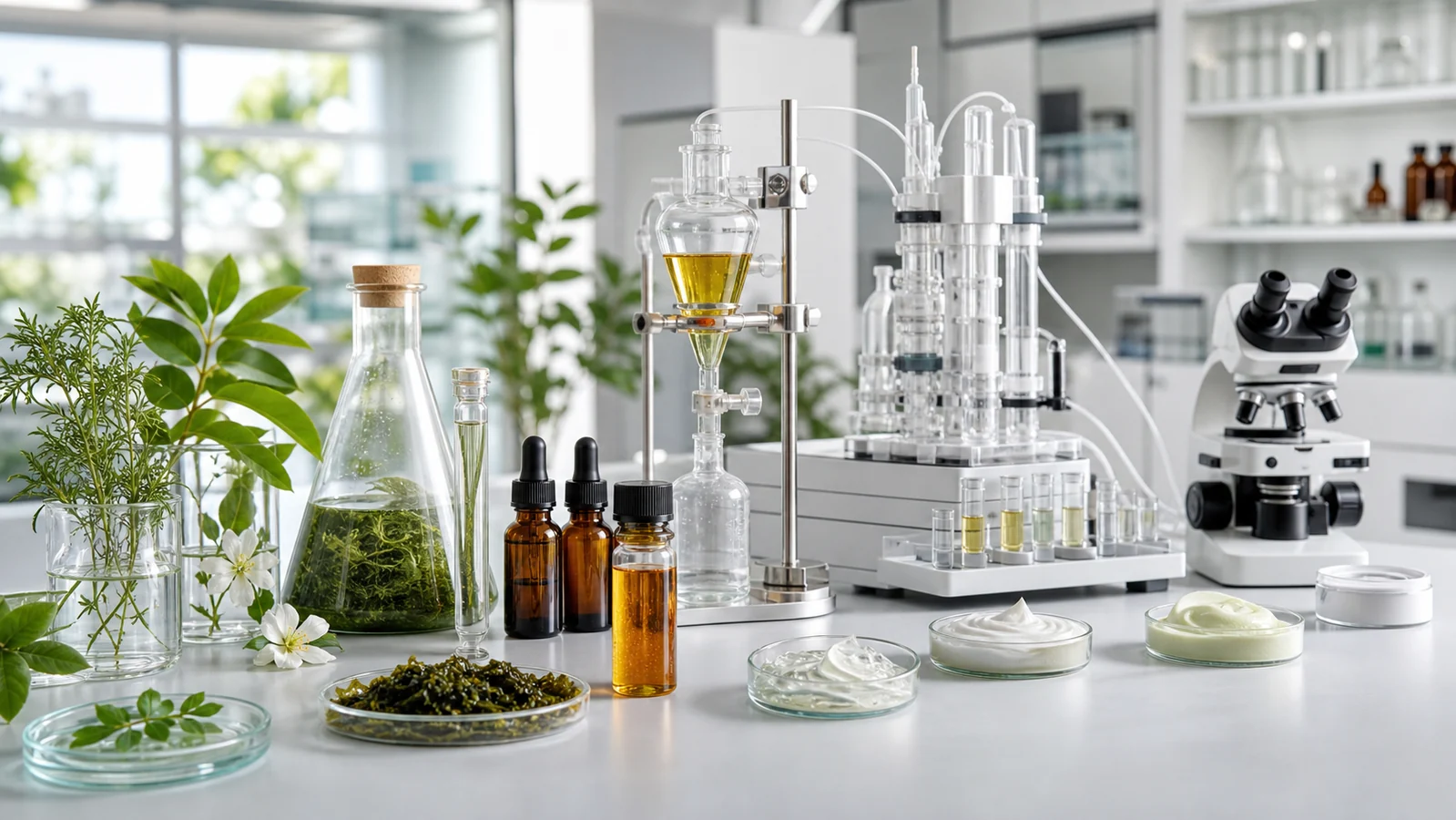
A practical test plan for colour, odour and oxidation changes in plant-oil systems, especially transparent packs and pale finished products.
Natural origin does not guarantee shelf stability
Light, oxygen, heat and trace metals can promote lipid oxidation. The visible consequences may include darkening, off-odour, rancid notes and changes in skin feel. In a clear bottle or a pale serum oil, even a modest colour shift can look like product deterioration to the customer.
Oil selection should therefore consider fatty-acid or wax-ester structure, starting colour, antioxidant content, sensory profile and compatibility with the intended pack.
Build a baseline before accelerated exposure
Record T0 colour, odour and standardised photographs. Where relevant, add analytical indicators such as peroxide value and acid value. Compare light-exposed, dark-control, elevated-temperature and antioxidant-treatment groups at defined intervals.
Instrumental colour difference can support photography, while blinded odour assessment reduces reliance on one person's judgement. A rapid screen can guide selection, but it should not be presented as a complete shelf-life study.
Formula and packaging controls work together
Antioxidant systems, light-protective packaging, lower oxygen headspace and control of trace metals can all reduce risk. The effect of fragrance, botanical extracts, UV filters and pack contact should also be checked in the complete product.
The useful customer deliverable is not simply an oil recommendation. It is an evidence-based choice of oil, antioxidant strategy, pack and monitoring plan.
Editorial and use boundary
Adapted from internal laboratory planning material. Test conditions, acceptance limits and shelf-life conclusions must be defined for the actual formula and packaging system.