
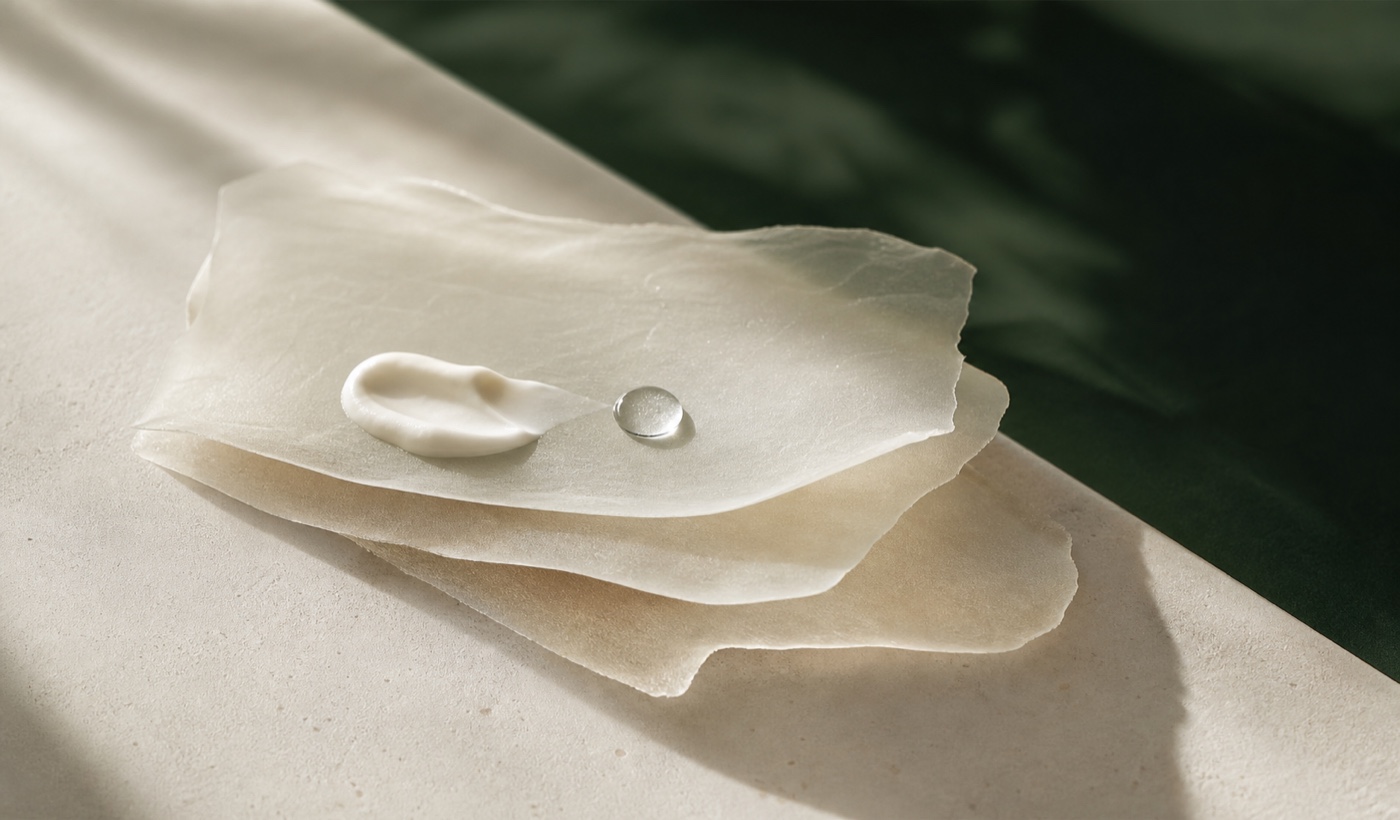
A cautious way to separate identity, quality specifications, formulation behaviour and cosmetic claim boundaries for nucleotide-based ingredients.
Start with identity, not the trend name
PDRN and PN are frequently used in market communication, but the terms should not be treated as interchangeable labels. Source, molecular-weight distribution, purity, manufacturing route and regulatory identity may all affect how a material can be formulated and described.
The first supplier questions should establish what the material is, how it is characterised and which documents support that identity.
Translate the concept into cosmetic functions
In cosmetic communication, safer development directions may include moisturising, skin-comfort support, barrier care and appearance-focused skin conditioning where supported by evidence. Treatment, wound-healing, injection-equivalence and other medical expressions should not be inferred from market familiarity.
Combination concepts can be explored with beta-glucan, panthenol, ceramide systems, centella-derived materials, peptides or hyaluronic acid, subject to compatibility and claim substantiation.
Selection and validation questions
Review source, purity, residuals, molecular-weight information, solubility, pH window, heat exposure, preservative compatibility and supply consistency. Hot ingredients often arrive with uneven specifications and incomplete evidence.
Finished-product validation may include moisturisation, transepidermal water loss, visible redness, comfort and other endpoints appropriate to the intended cosmetic claim. Market-specific legal review remains necessary.
Editorial and use boundary
This article provides a selection framework, not a regulatory classification or efficacy conclusion. Identity, permitted use and claims must be checked for the target market and the exact ingredient specification.