
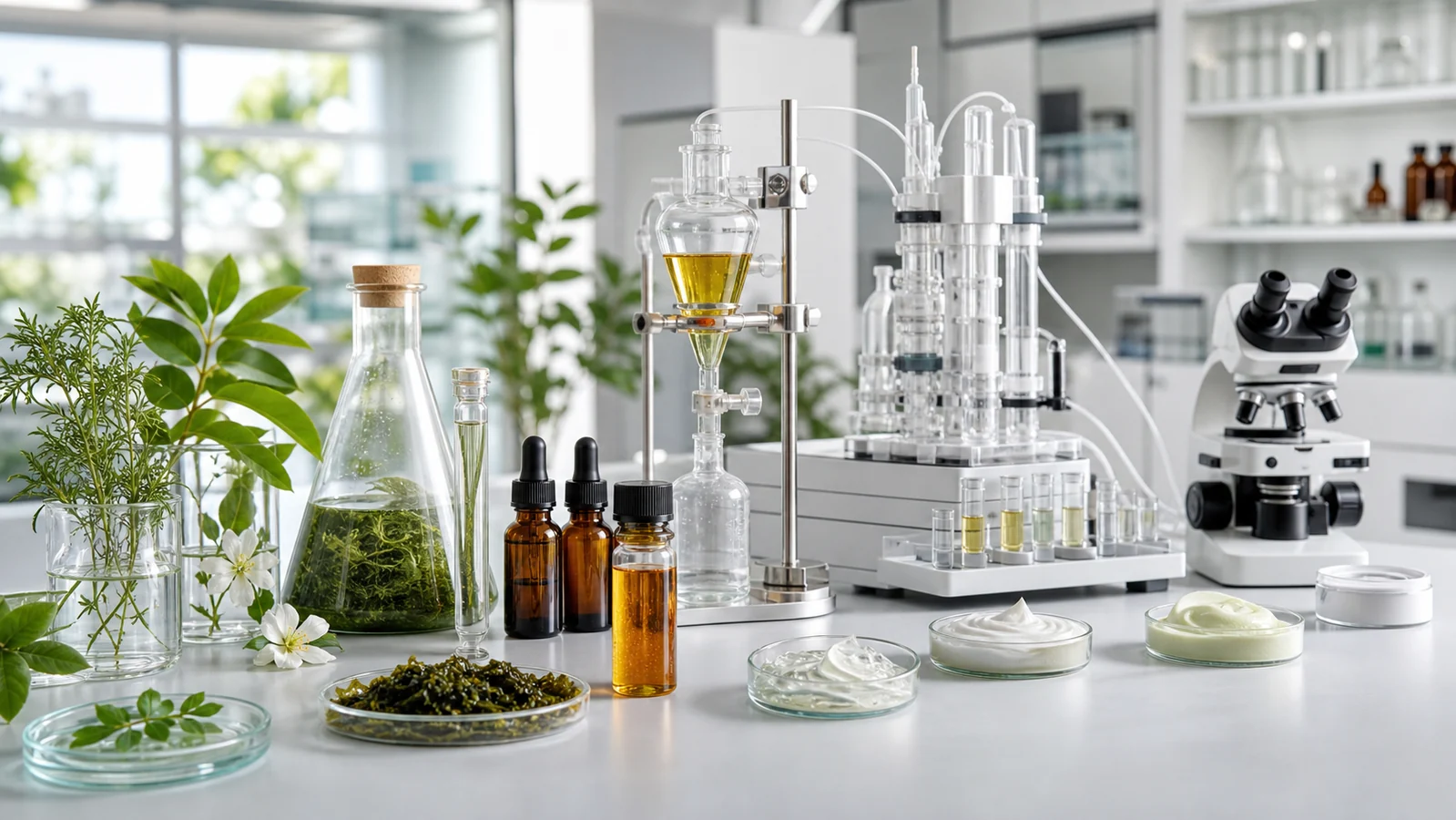
This editorial distills the causal links between UVA1, visible light, and skin aging. It distinguishes direct experimental evidence from review summaries, focusing on ROS-mediated pathways, mitochondrial DNA damage, and the complex role of antioxidants in pigment balance.
Evidence Hierarchy and Source Distinction
Current evidence on light-induced aging comprises two distinct categories: direct experimental studies and review summaries. Direct experiments, such as those examining UVA1 and visible light (Vis) exposure, provide higher-level causal data on pigmentation and mitochondrial DNA damage. These studies offer concrete observations of biological responses to specific wavelengths.
In contrast, review articles often synthesize data on natural compounds and oxidative stress, presenting conclusions that are inductive rather than direct. For instance, claims about flavonoids clearing reactive oxygen species (ROS) are summaries of conflicting data. These reviews cannot be equated with the performance of a specific compound in a defined formulation, requiring careful differentiation between general mechanisms and specific experimental outcomes.
Physical Mechanisms of Light Absorption
The interaction between light and skin begins with photon absorption, where UVA and visible light differ in penetration depth and biological targets. While both wavelengths generate ROS, visible light primarily affects epidermal pigmentation, whereas UVA1 penetrates deeper to impact mitochondria and the dermal matrix. This physical distinction underpins the different aging pathways observed in experimental models.
Melanin acts as an endogenous photoprotectant by absorbing UV and blue light and clearing ROS. However, exogenous melanin-related molecules, such as polydopamine, possess high UV absorption but face physicochemical limitations regarding color and stability. These properties restrict their application in transparent or light-colored formulations, highlighting the challenge of balancing photoprotection with aesthetic requirements.
Biological Cascade from ROS to Tissue Damage
Pigmentation pathways involve ROS-mediated activation of melanocytes, where UVA1 and visible light exhibit synergistic effects. In darker skin types, visible light induces deeper and more persistent pigmentation than UVA1 alone. The combination of low-dose UVA1 and visible light can produce a synergistic response, indicating that pigmentation is not a linear sum of individual wavelength effects but involves threshold-based mechanisms.
Matrix degradation is driven by UVA1-induced mitochondrial DNA damage in dermal fibroblasts, leading to increased MMP-1 expression and collagen breakdown. ROS further activate signaling pathways that suppress collagen production and promote matrix metalloproteinase expression. This creates a cycle of oxidative stress, inflammation, and structural degradation, distinct from the repair mechanisms observed in wound healing studies.
Validation Design and Formulation Constraints
Validating light-aging protection requires distinguishing between pigment and matrix endpoints. Pigment changes can be measured via colorimetric analysis, while matrix degradation is assessed through MMP-1 activity or collagen density. Mitochondrial DNA loss serves as a specific biomarker for UVA1 exposure, detectable via qPCR. Failure to reduce ROS levels or mitigate pigment changes despite ROS reduction suggests independent pathways for melanogenesis.
Formulation design must address wavelength coverage and ingredient compatibility. Standard SPF metrics primarily reflect UVB protection, often overlooking UVA and visible light effects. Nanocarriers may improve surface coverage and stability, but their ability to enhance deep penetration or protect against mitochondrial damage requires independent testing. Additionally, the color and sensory properties of dark photoprotective agents must be evaluated for consumer acceptability.
Editorial and use boundary
Evidence is limited to in vitro and specific clinical models; findings do not establish general efficacy, safety, or regulatory status for any ingredient.